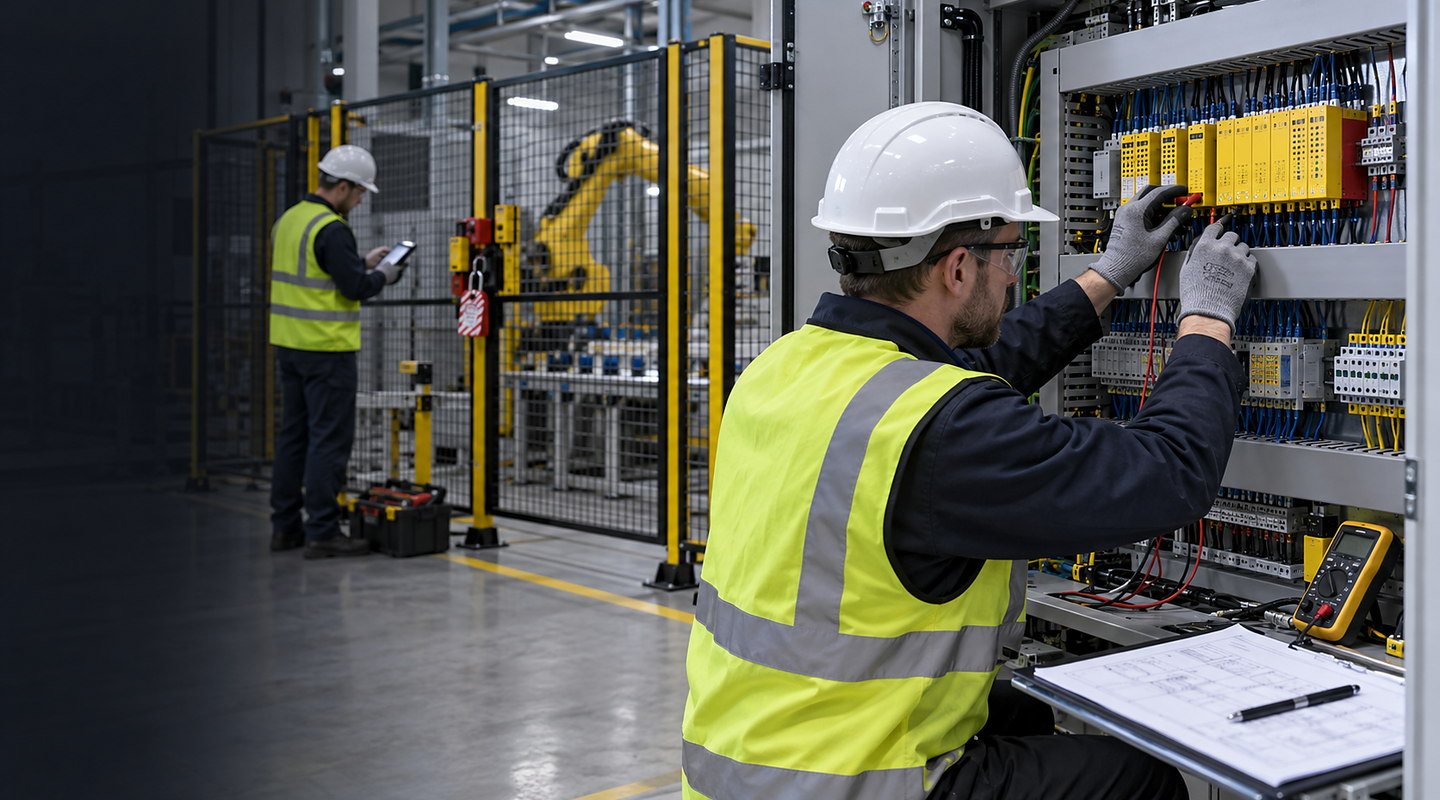
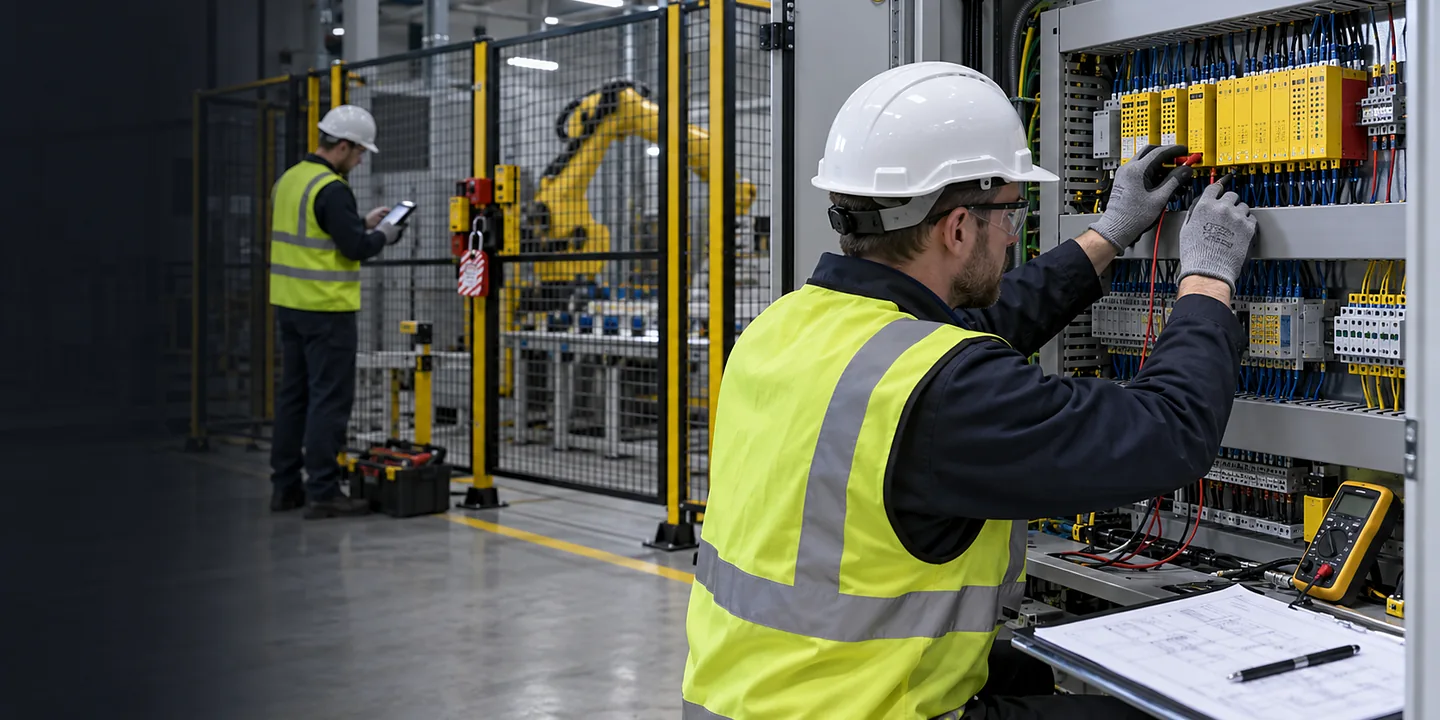
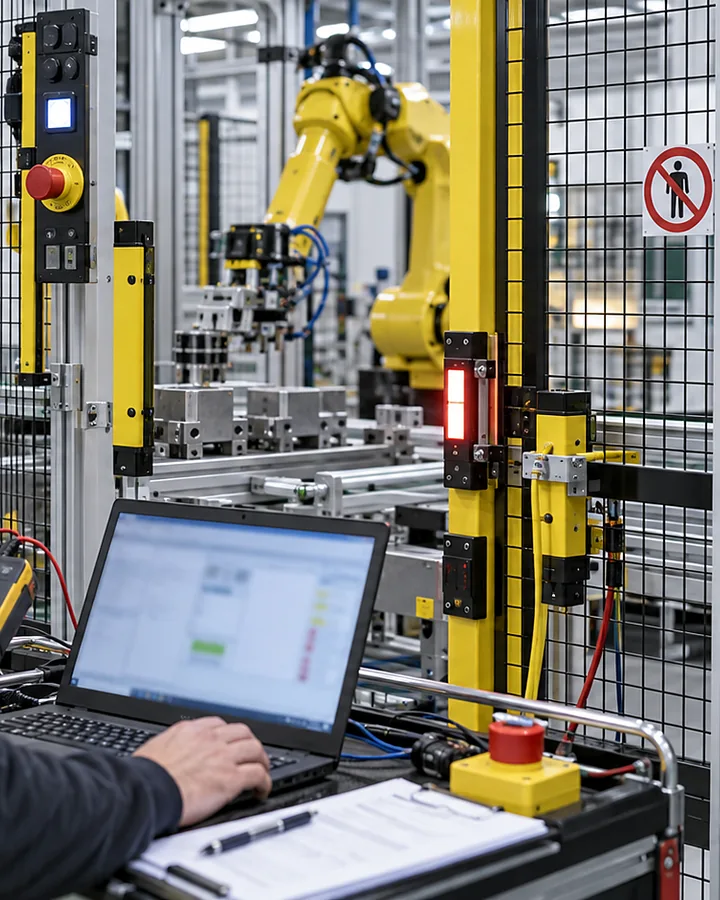
Plan a machine safety PLC project around defined safety functions, inputs, safe outputs, operating modes, reset and restart behaviour, diagnostics, controlled software and validation evidence.
Speak directly with Oxford Machine Guarding about machine safety PLC integration.
Quick answer
When should a machine safety system use a safety PLC?
List the safety functions, devices and machine zones that must interact, including expected future changes. Compare the required logic, diagnostics and maintenance needs with the existing controls. The selected architecture should follow the safety requirements and validation plan for the application, with programs, drawings and change control included in the handover.
Application decisions
Define the safety functions before the programmable platform
A safety PLC project begins with the required machine response to each safety demand. Organise the brief around inputs, logic, outputs and operating modes so the selected hardware and software can be assessed as part of complete functions.
Write one requirement for each function
Identify the initiating device or condition, affected hazard, required safe state and the machine area involved. Record the risk-assessment basis and the responsible competent designer. A list of devices or spare I/O points does not by itself define what the machine must do.
Draw the zone interactions
Show which zones stop together and what happens when adjacent equipment continues operating. Include loading, setting, cleaning and recovery modes. Map shared conveyors or product transfers that cross a zone boundary so the design review covers the complete line interaction.
Include the final controlled devices
Identify the drives, contactors, valves or other outputs that bring the machine to its intended state. Review feedback and relevant failure behaviour within the complete function. Selecting a safety-rated controller alone does not establish the suitability of the connected machine arrangement.
Specify reset and restart separately
Describe the operator action after a safety demand and the conditions under which production may resume. Include where the reset is operated and what the operator can observe. The intended sequence should be explicit in the requirements and checked during validation.
Control software and future changes
Agree ownership of project files, versions, access permissions and backups. Identify how an approved change is reviewed, downloaded and checked against the installed system. Include the software tools and records needed for support instead of leaving a future maintainer with an unexplained compiled program.
Plan validation before commissioning
Assign each requirement a test or review and record the expected result. Include operating modes, defined fault conditions and interfaces with standard controls. Validation work must be planned and performed by competent personnel; a normal production cycle is not a complete safety validation.
Two useful starting points for machine safety PLCs
The right choice changes with required safety functions and safe states, input devices, zones and operating modes, your line layout and required results.
Carry the application decisions into a documented review and an agreed test or inspection plan.
01
Establish the machine baseline
Gather risk information, drawings, devices, modes and existing software records.
02
Approve a function and zone specification
Resolve interactions and responsibilities before hardware and program design are fixed.
03
Verify the installed version
Reconcile wiring, configuration and software with the approved design.
04
Retain validation and support records
Close agreed findings and hand over controlled drawings, versions, backups and change procedures.
Important limits
Know what needs a separate check
A safety PLC does not make an inadequately defined safety function acceptable.
Hardware and software changes require controlled versions and validation of the complete function.
Required risk reduction and final conformity responsibilities remain machine-specific.
Your final solution for machine safety PLC integration must reflect the law, current standards and site-specific risks that apply to your installation.
Application decision
When does a safety PLC add useful control rather than unnecessary complexity?
Decide whether a safety PLC is appropriate for defined safety functions, zones and modes, and understand the engineering and validation scope around it.
Evidence to compare
Compare the number and interaction of safety functions, zones, modes, diagnostics and safe-drive interfaces.
Production condition
architecture follows the risk assessment and safety-function specification, not the hardware brand.
Acceptance decision
Include software ownership, change control, backups and validation in the buying decision.
The quotation brief should record defined safety functions, hazards and safe states and number and interaction of zones and operating modes. Final suitability remains specific to the samples, line conditions and acceptance tests agreed for your project.
Write a safety function so it can be independently checked
Before selecting safety PLC hardware, describe each required function in terms of an initiating condition and the machine state it must achieve. The specification should be understandable without knowing the programmer’s preferred implementation.