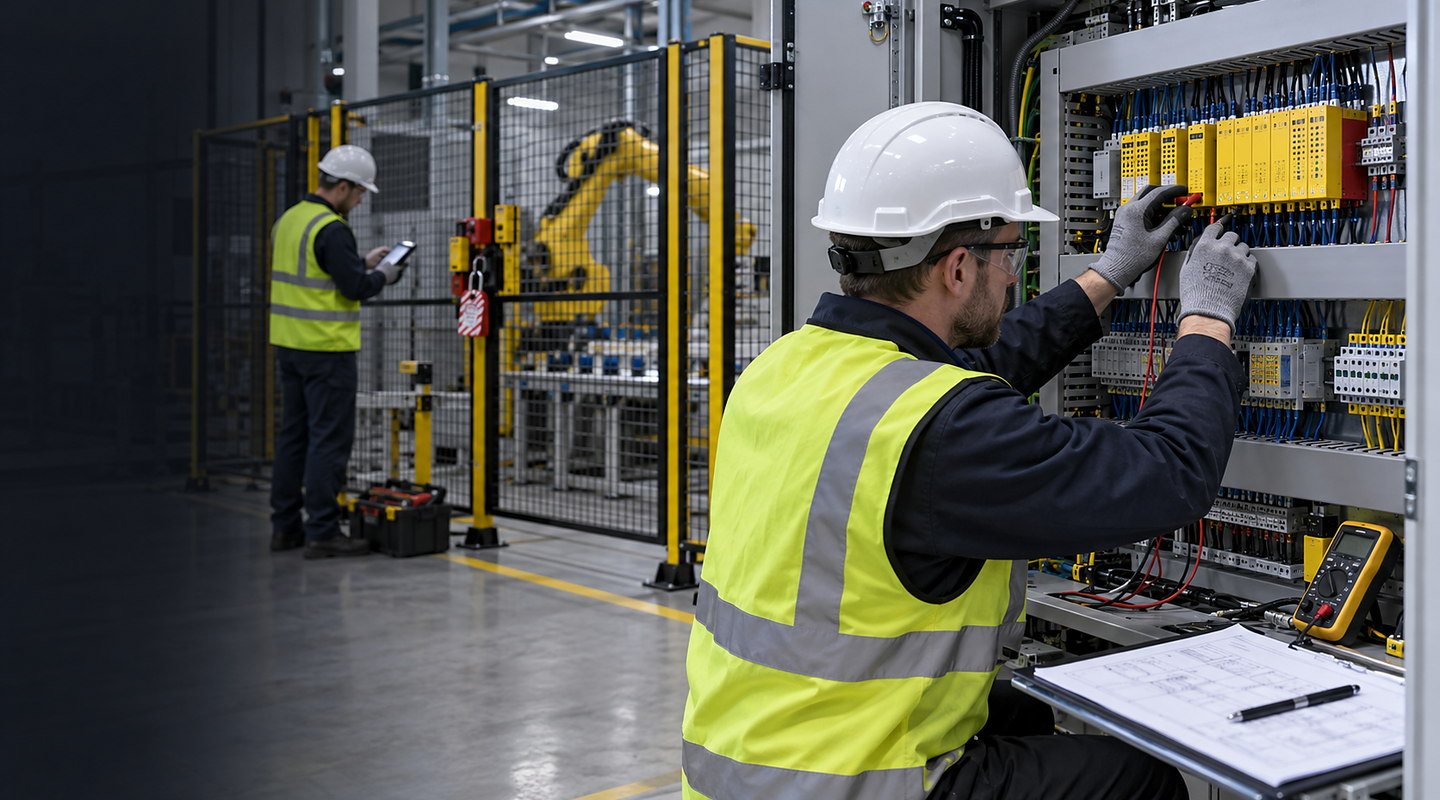
Machine Safety PLCs Selection Guide
Choose machine safety PLCs by comparing your parts, process, rate, access, data needs and required results.
Compare safety PLC architectures against the machine's defined safety functions and safe states, not general production speed. Review input devices, zones, operating modes, safe outputs and existing control interfaces, then agree the software records and machine-specific validation work with competent project personnel.
For integration of safety PLC logic for defined machine safety functions, a short trial that reproduces the difficult condition is often more useful than a long list of nominal specifications.
Compare options in the conditions where they must work — Machine Safety PLCs
Plan a machine safety PLC project around defined safety functions, inputs, safe outputs, operating modes, reset and restart behaviour, diagnostics, controlled software and validation evidence. A useful shortlist should show how every option copes with required safety functions and safe states and reset, restart, diagnostics and recovery behaviour.
Discuss your application
Ask every supplier the same questions
| Decision | What to ask | What to check |
|---|---|---|
| Required Safety Functions and Safe States | What is required for required safety functions and safe states, and which test or record will verify it? | Representative samples and a controlled trial. |
| Input Devices, Zones and Operating Modes | What is required for input devices, zones and operating modes, and which test or record will verify it? | Representative samples and a controlled trial. |
| Safety PLC Hardware, Program and Version Control | What is required for safety PLC hardware, program and version control, and which test or record will verify it? | Drawings, observation and interface measurements. |
| Safe Outputs, Drives and Standard-Control Interfaces | What is required for safe outputs, drives and standard-control interfaces, and which test or record will verify it? | Drawings, observation and interface measurements. |
| Reset, Restart, Diagnostics and Recovery Behaviour | What is required for reset, restart, diagnostics and recovery behaviour, and which test or record will verify it? | Agreed operating and acceptance records. |
| Drawings, Software Records and Validation Evidence | What is required for drawings, software records and validation evidence, and which test or record will verify it? | Agreed operating and acceptance records. |
Include simpler approaches to machine safety PLC integration in your shortlist
| Approach | Often suitable when | Watch for |
|---|---|---|
| Machine Safety PLCs | The defined safety functions, modes and diagnostics justify the proposed control change. | Verify the complete function, including inputs, logic, outputs, reset and restart. |
| A Verified Safety-Relay Architecture for Limited and Clearly Defined Safety Functions | A small number of clearly defined functions can be monitored without unnecessary programmable complexity. | Check contact monitoring, fault behaviour, reset logic and future support. |
| A Safety PLC where Multiple Zones, Modes, Diagnostics or Controlled Logic Justify It | Multiple zones, modes or diagnostics justify controlled programmable safety logic. | Control software versions, access, verification and validation must be planned. |
Pause before choosing when…
- The required safety functions and safe states have not been defined.
- Current devices, modes, drawings or stopping behaviour are unknown.
- A replacement is assumed equivalent because its terminals or headline rating look similar.
- Fault, reset, restart and diagnostic behaviour have not been specified.
- No competent validation plan or controlled record has been agreed.